Mold Inspections
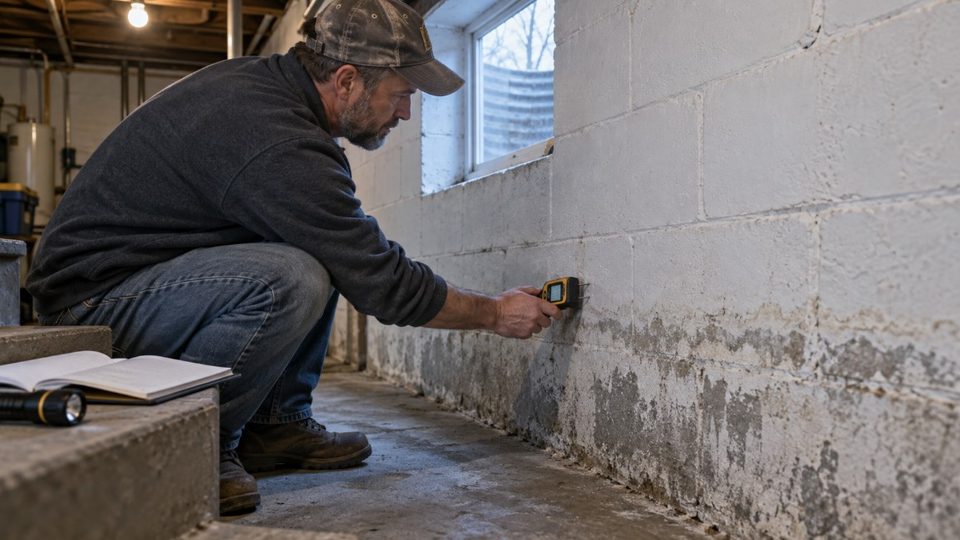
Room-by-room assessment with thermal imaging and moisture metering — including the rim joist, the crawl space and behind finished basement walls, which is where most inspections stop.
Southern Wisconsin is full-basement country with a hard winter and a river running through the middle of it. Limestone cellars on Courthouse Hill, worker housing on the east side, postwar basements finished thirty years after they were poured, and low ground from Blackbridge to Afton that answers to the Rock River. Call and tell us what you are seeing — a mold specialist will work out which of those you are probably looking at, before anyone visits and before you spend anything.
There is no form on this site and no email capture. One number, answered around the clock. Describe what you can see or smell, where it is, when it started and roughly how old the building is — that is usually enough to narrow it a long way before anyone sets foot on the property.
Describe what you are seeing and a specialist will tell you what it is likely to be.
Every project follows the same order: find the water, contain the area, remove what cannot be saved, dry the structure to a documented target, and verify the result independently.
Room-by-room assessment with thermal imaging and moisture metering — including the rim joist, the crawl space and behind finished basement walls, which is where most inspections stop.
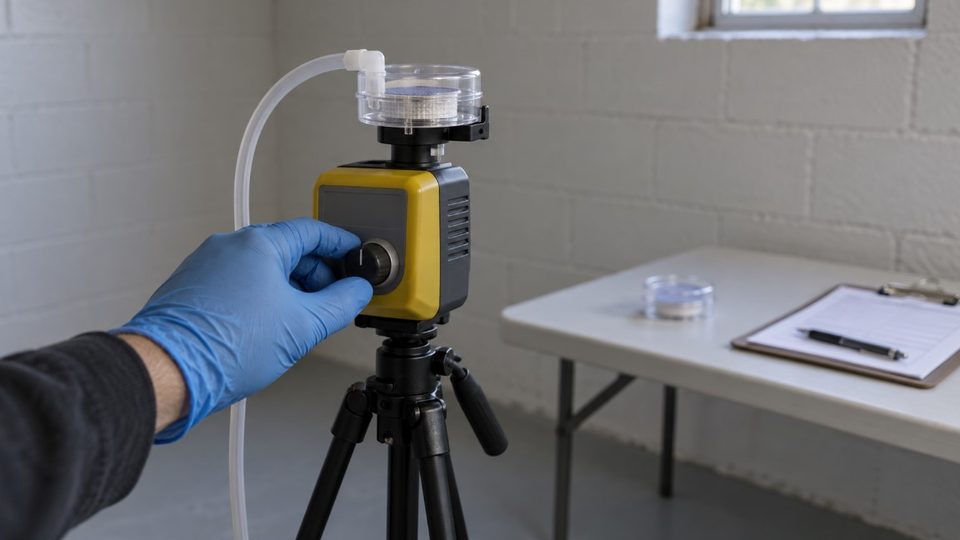
Air and surface sampling analyzed by an accredited laboratory, always against an outdoor control. Interpretation you can act on rather than a spore count on its own.
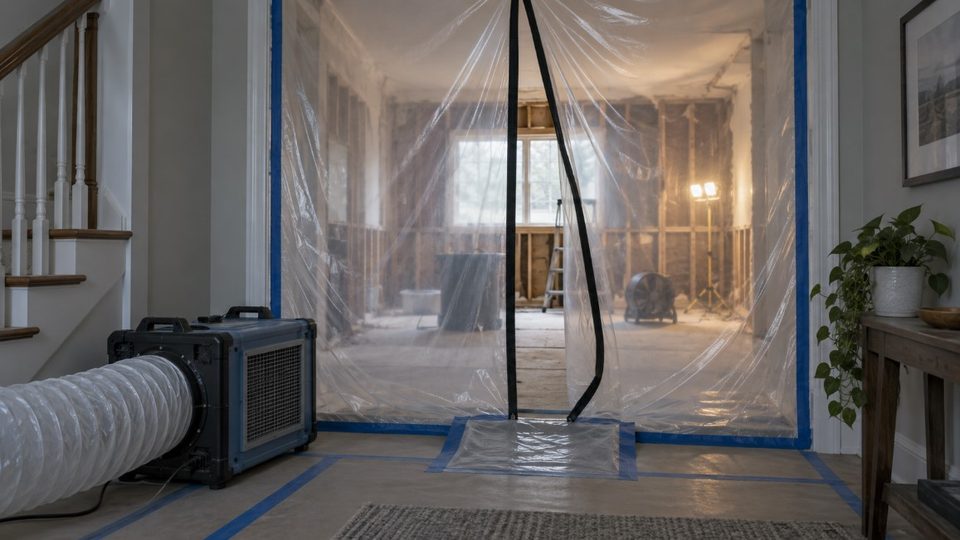
Containment, negative air with HEPA filtration, controlled removal of what cannot be saved, HEPA vacuuming and treatment to IICRC S520.
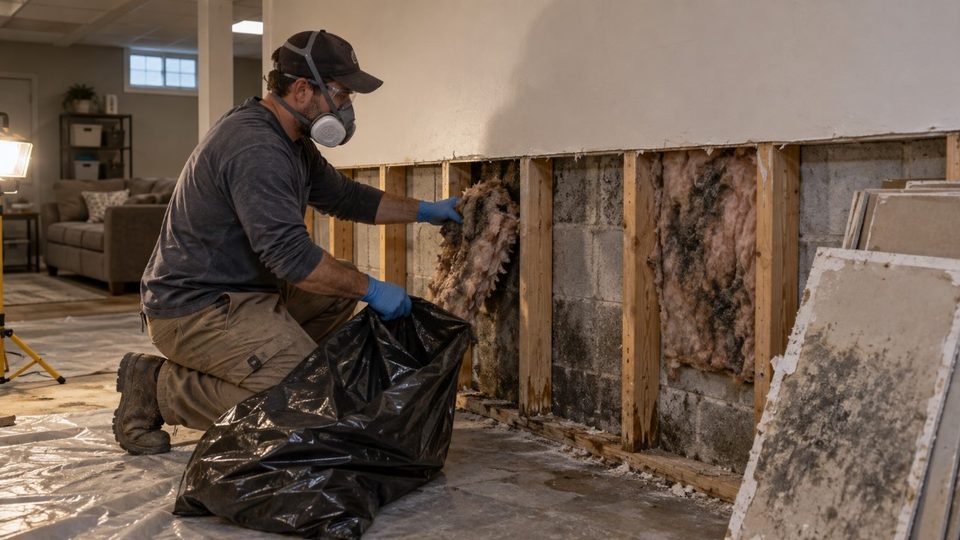
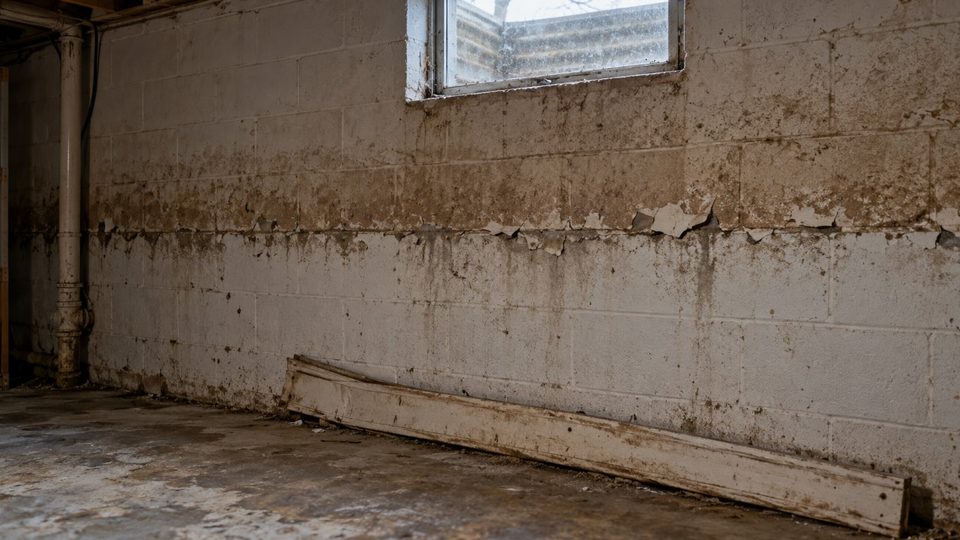
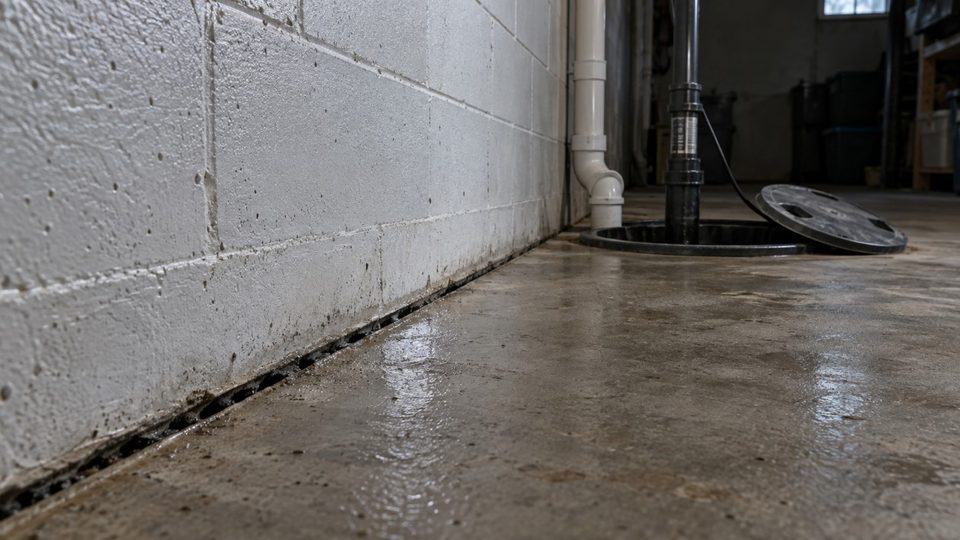
The defining problem in this county. Finished basement assemblies, limestone and block foundations, sump failures, and the drying strategy that stops it returning.
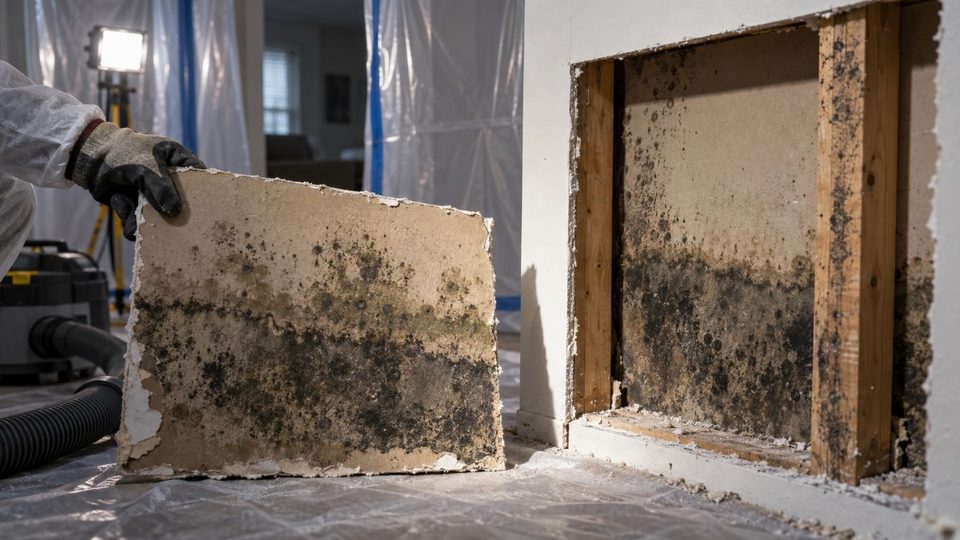
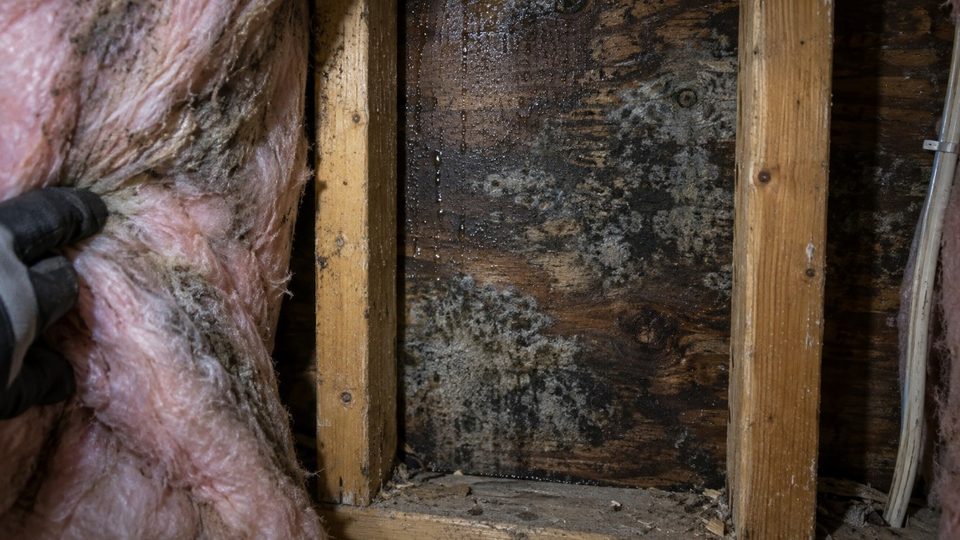
Full containment for Stachybotrys and other water-damage indicator species — including finding the sustained water source that let it establish.
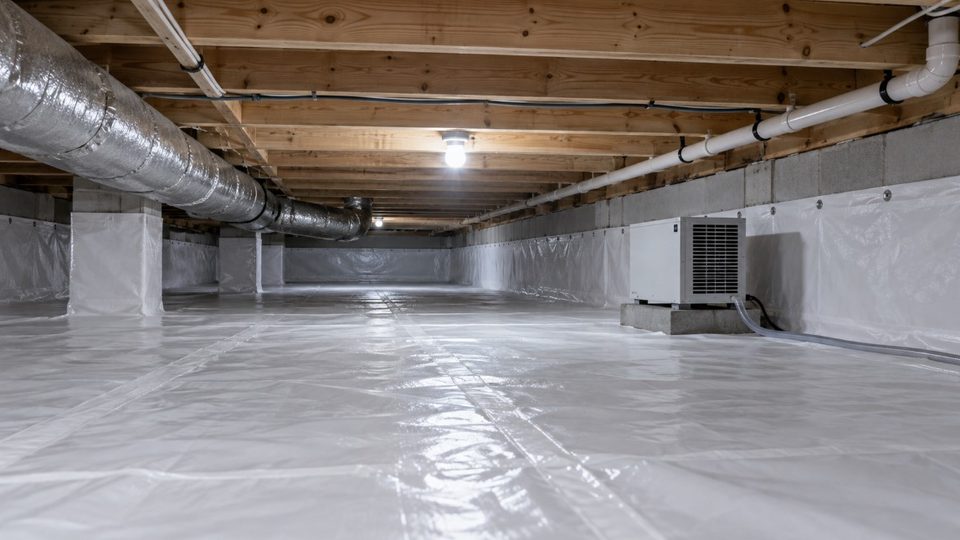
Remediation plus the correction that matters: closing the vents, sealing a vapor barrier, insulating the perimeter and conditioning the space.
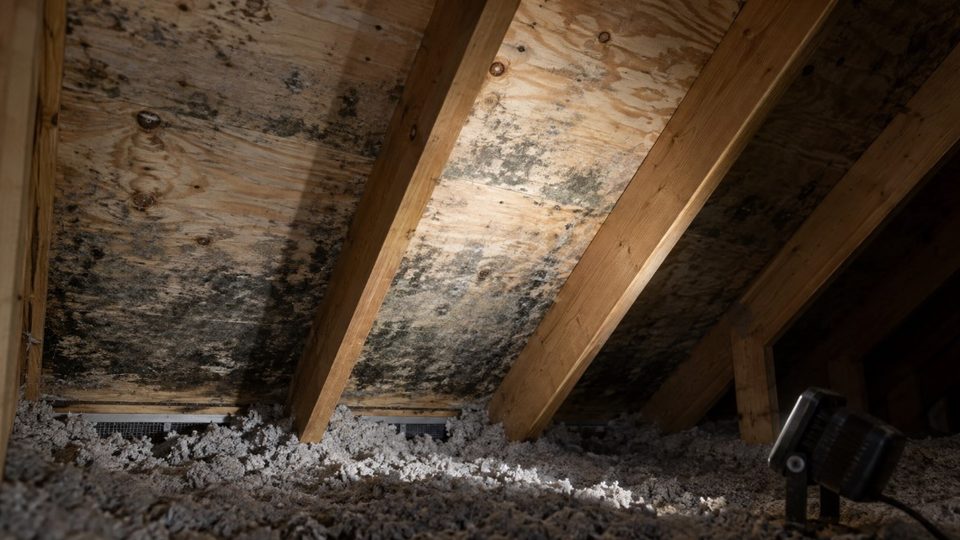
Sheathing and rafter growth traced back to its real cause — bath fans venting into the attic, blocked soffits, ice damming, or air leakage at the ceiling plane.
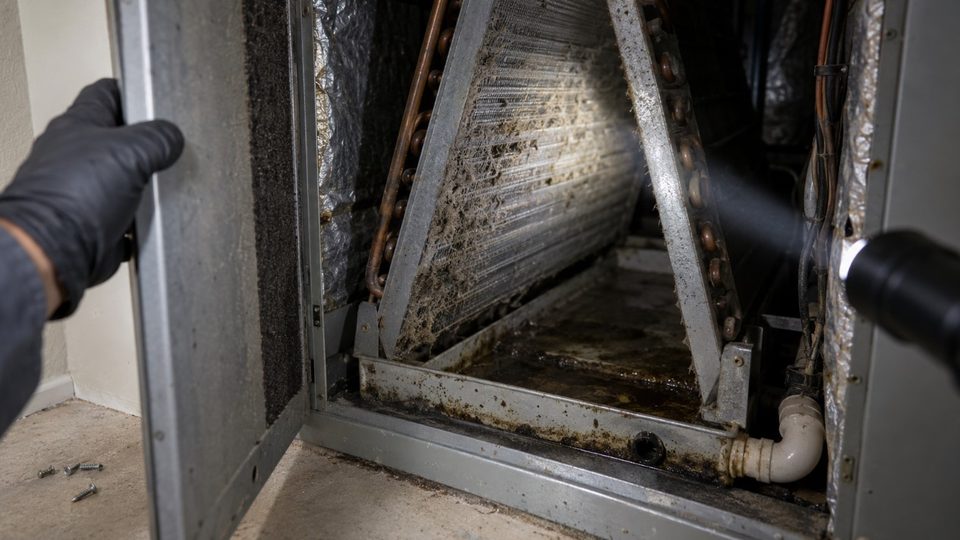
Evaporator coil, condensate pan, plenum and duct interior. The air handler is the one machine capable of distributing a local problem through the whole house.
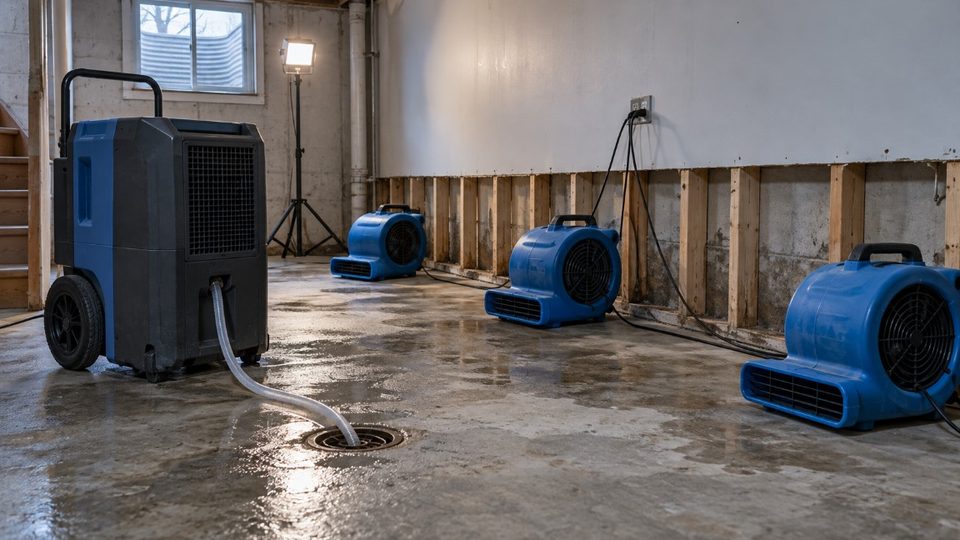
Frozen and burst supply lines, sump failures and Rock River flooding. The 24 to 48 hour window that decides whether this becomes a mold job at all.
Where a fogging treatment is genuinely appropriate, where it is not, and why it is never a substitute for removing water-damaged porous material.
Independent clearance testing by someone who did not perform the remediation. The only document that proves the job actually worked.
Rebuilding what remediation removed — drywall, insulation, flooring, trim — using assemblies that will not recreate the original failure.
Most mold advice online is written for a hot, humid, slab-on-grade market, and applied here a good deal of it is not merely unhelpful but backwards. In a southern Wisconsin winter the vapor drive is outward: warm moist indoor air pushes into the wall and roof assemblies and condenses on the first cold surface it finds. That is the back of the sheathing, the rim joist and the underside of the roof deck — none of which anybody looks at. The staining appears the following summer, months after the mechanism that caused it has stopped.
And in a large share of them, that basement was finished decades after it was built, with a stud wall tight against cold masonry, fiberglass batts between the studs, paper-faced drywall over that and carpet on the slab. Every element of that assembly is wrong for this climate: the masonry is cold, fiberglass stops neither air nor vapor, it holds water against the board, the paper facing is cellulose, and the whole thing is invisible. Growth runs on the concealed face for years before anything reaches the room.
Not only in a flood. Groundwater under the low ground at Blackbridge, Riverside, Traxler Park and Afton follows the river within days, so a basement that is dry in August takes water in March without a drop falling on the property. June 2008 was the extreme case — the Rock ran at a level not seen in living memory and put water into basements across the county — but the ordinary spring version happens every year.
Rock County is an EPA Radon Zone 1 county, and roughly half of homes tested here come back at or above the action level, with three Janesville ZIP codes among the highest in the state. That is not a mold fact, but it matters here because radon and water use the same entry routes — the slab-to-wall joint, cracks, the sump pit. If you are opening a basement up, it is the cheapest time in the building's life to deal with both.
The season is usually the clue. Damp that appears in July is condensation. Damp that appears in March is groundwater. Staining that appears in July on an upstairs ceiling is last February's ice dam. Call (608) 724-1919 and describe the timing — it narrows things fast.
Each area page covers that community’s own building stock, drainage and flood history — because a limestone cellar on Courthouse Hill and a 2015 basement in Milton do not fail the same way.
Practical articles on mold in a Janesville house — basements and limestone foundations, ice dams, frozen lines, Rock River flooding, what the work costs here and what your insurance is likely to say.
The flood was the event. The mold was what happened in the eight weeks afterwards, in houses that were dried out but never opened up.
Rock County is an EPA Zone 1 county and roughly half of tested homes come back above the action level. Radon and moisture use the same routes in, which makes them one job.
In a cold climate the moisture moves outward all winter and condenses on the back of the sheathing. Why warm-climate advice gets this exactly backwards.
Start by working out what you are actually dealing with, because the right trade differs. Damp on a basement wall every July is condensation and needs air sealing and a dehumidifier, not a remediation crew. Staining on attic sheathing is a ventilation fault. Material that has been wet for weeks needs contained removal to the IICRC S520 standard. Whoever you call, ask for proof of general liability insurance, current IICRC certification for the technician doing the work, a written scope before anyone starts, and a Wisconsin Dwelling Contractor credential for any rebuild. If you would rather talk it through first, call (608) 724-1919 and describe what you are seeing. We cover Janesville and eighteen surrounding communities.
Because nearly every house here has one, and because a basement in southern Wisconsin spends the year caught between two opposite pressures. In winter, warm moist indoor air pushes outward into cold assemblies and condenses on the first cold surface it reaches — the rim joist, the back of a finished basement wall, the underside of the sheathing. In summer, the direction reverses: humid outdoor air meets masonry that is still sitting at deep-earth temperature, and deposits water on it. Add a river that raises the water table a few days after it rises itself, and a housing stock where a large share of the basements were finished decades after they were built, and you have the local pattern.
The honest answer is that it depends far more on how much water has been present and for how long than on the color of what you can see. The Institute of Medicine and the World Health Organization both found consistent evidence linking damp indoor environments to respiratory symptoms, asthma exacerbation and cough. Neither found that ordinary household mold causes the dramatic outcomes that circulate online. What that means in practice: a damp building is worth correcting, urgency rises if anyone in the house has asthma or is immunocompromised, and panic is not the useful response. Describe what you have on the phone and you will get a straight read on whether it needs attention today or can wait.
Planning ranges for this market: a small contained area such as one wall section, roughly $500 to $1,500. A single room, roughly $1,200 to $3,800. A finished basement excluding reconstruction, roughly $4,000 to $12,000. Attic remediation with cleaning, treatment and re-insulation, roughly $2,800 to $7,500. Crawl space remediation with encapsulation, roughly $3,500 to $11,000. An inspection on its own, roughly $250 to $600. These are south-central Wisconsin planning figures rather than quotes — see the full cost guide for what moves a number up or down.
No. Wisconsin issues no state license for mold inspection or mold remediation specifically, and there is no state register of mold contractors to check someone against. What the state does regulate is construction work on one- and two-family dwellings, which requires a Wisconsin Dwelling Contractor credential through DSPS — and that is checkable, free, on the DSPS site. So the practical verification list is: general liability and pollution liability insurance, IICRC S520 certification for the person actually doing the work, a written scope of work before anything starts, and the DSPS credential for any rebuild. Any contractor who objects to being asked for those four has told you something useful.
An inspection finds the water and the extent; testing produces a document. For most homeowners the inspection is the part that changes what happens next, and testing adds nothing to a situation where you can already see the growth and know where the water came from. Testing genuinely earns its place in four cases: a dispute with a landlord, seller or insurer; symptoms with no visible source; before and after work you are paying a lot for; and independent clearance at the end of a remediation. See inspection versus testing for where the line sits.
Given the right material, growth can begin within 24 to 48 hours, which is why the first two days after a burst pipe or a sump failure matter more than anything that happens afterwards. Porous material that has been wet longer than that is generally removed rather than dried, because drying it kills nothing and leaves the colonized material in place. If water has just happened, the useful order is: stop the source, get the standing water out, open the wet assemblies up rather than closing them, and start air movement and dehumidification. See the 48-hour timeline for what that looks like hour by hour.
On some properties clearly yes, on others it is money you do not need to spend. Worth it: anything with a finished basement, anything within reach of the Rock River, anything built before about 1940, anything that has been vacant or minimally heated, and anything where the general home inspection flags elevated moisture. Probably not worth it: a well-maintained newer house with a dry unfinished basement and no moisture flags. While you are at it, test for radon — Rock County is an EPA Zone 1 county and the test is inexpensive.
Call the line and describe what you are dealing with. You will get an honest read on urgency and scope before anyone sets foot on your property.
Call (608) 724-1919