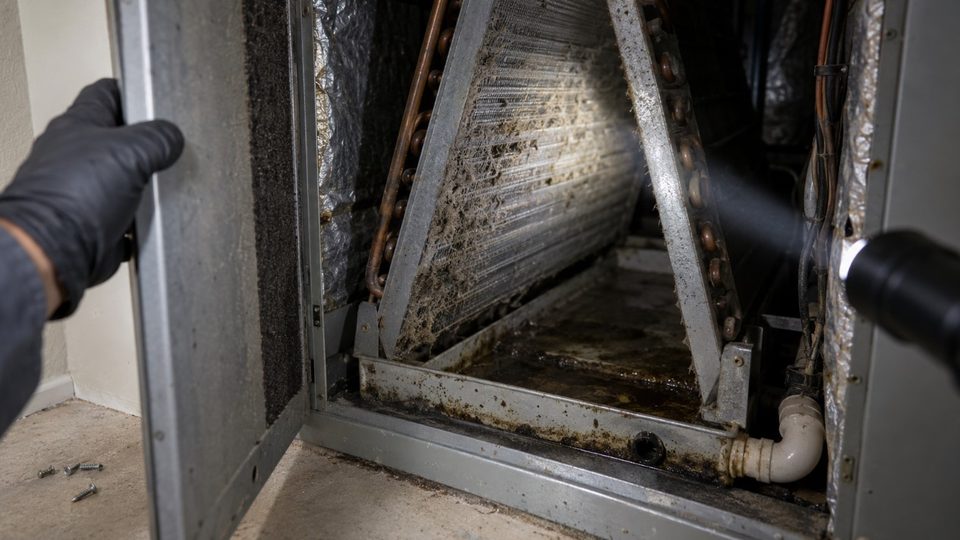
The Coil Is the Problem, Not the Ducts
Duct cleaning is sold far more often than it is needed. The ductwork in most houses is dusty rather than contaminated, and dust in a duct is not a mold problem. What is a mold problem — reliably, in this climate and every other — is the evaporator coil and the condensate pan sitting directly in the airstream.
The coil is wet every time the system cools. It is dark. It catches every particle the filter missed. That combination is an ideal growth site, and unlike the ducts it is directly upwind of every room in the house. A cleaning that does the ducts and leaves the coil has cleaned the pipe and left the source.
Smell it when the system starts?
Tell us whether the odor arrives with the fan and whether you run a whole-house humidifier through the winter. That usually separates a coil and drain pan problem from a duct problem.
(608) 724-1919Free phone consultation.
Where It Actually Grows
- The evaporator coilPermanently damp in the cooling season, dust-fed, and the single most common location. Requires opening the air handler cabinet to see.
- The condensate drain pan and lineStanding water because the pan is not sloped, the line is partially blocked, or the trap has dried out. Overflow then wets whatever is beneath it.
- The blower wheel and compartmentFouled blades throw particles into the supply air and reduce airflow at the same time.
- The supply plenumEspecially where it is lined with fiberglass duct board, which holds moisture in a way sheet metal does not.
- Duct running through unconditioned spaceUninsulated duct in a crawl space or an unheated attic sweats in summer and drips on whatever is below.
- The humidifier, if there is onePanel and pad, and the tray under them. Frequently left in service through spring when it should be off.
Very common in Rock County, and it changes the whole picture. The air handler draws basement air in, runs it across a wet coil, and distributes it to every room upstairs. A bedroom air quality complaint in a house like this frequently has nothing to do with the bedroom. Fix the basement humidity and the coil at the same time, or the coil will be in the same state next year.
What a Proper Cleaning Includes
- Opening the cabinet and cleaning the coil on both faces, not just the accessible one
- Clearing and treating the condensate pan and flushing the drain line
- Cleaning the blower wheel, which is usually the dirtiest single component
- Source removal from the ductwork under negative pressure, not just a brush
- Sealing or replacing fiberglass duct board that is contaminated rather than trying to clean it
- Replacing the filter with MERV 11 to 13, if the system can take the pressure drop
- Checking that return ducts are actually sealed, so the system is not drawing unfiltered basement or crawl space air
What a NADCA-Standard Cleaning Actually Involves
The trade reference is the NADCA ACR standard, and the phrase that matters in it is source removal — physically dislodging and extracting debris under continuous negative pressure, rather than blowing it around or spraying something on it.
The method, step by step
- Inspect and photograph firstCamera into the supply and return trunks and into the air handler cabinet. If a contractor cannot show you the inside of your own system before quoting, they have not looked.
- Put the system under negative pressureA high-volume vacuum connected to the trunk, exhausting outdoors or through HEPA. Everything dislodged travels to the vacuum rather than into the house.
- Agitate mechanicallyRotating brushes, air whips or skipper balls, branch by branch, with each register isolated in turn so the airflow actually reaches it.
- Clean the air handler itselfCoil on both faces, blower wheel removed or cleaned in place, condensate pan cleared and the drain line flushed, cabinet interior wiped.
- Address fiberglass duct board separatelyPorous lining cannot be brushed clean the way sheet metal can. Damaged or contaminated board is replaced or encapsulated, not scrubbed.
- Re-seal every access openingCut ports closed properly, not taped over.
- Photograph againBefore and after, per trunk. This is the deliverable.
The blower wheel is usually the worst component
And it is the one most often skipped, because cleaning it properly means pulling the blower assembly. A wheel with a few millimeters of packed dust on the blades loses a substantial fraction of its airflow, which makes the coil colder and wetter, which grows more of what you are trying to remove. If a quote does not mention the blower, ask.
Filtration: what the system can actually take
MERV 11 to 13 is the sensible range for a residential system — enough to capture mold spores and fine dust without starving the airflow. The caution is real: a high-MERV filter in a system designed for a cheap fiberglass panel raises static pressure, cuts airflow across the coil and can make the coil freeze. If you are stepping up, use a deeper media filter (4 inch rather than 1 inch) which gives the same filtration at far lower pressure drop, and have the static pressure checked.
Change intervals: a 1-inch pleated filter every 1 to 3 months, a 4-inch media cabinet every 6 to 12. In a house with a damp basement, at the short end.
The condensate side, which nobody looks at
A blocked or slow condensate drain is the commonest single cause of a wet air handler cabinet. The trap dries out in the heating season, the line partially blocks with biofilm, the pan overflows in the first humid week of summer, and whatever is under the air handler gets wet. A pan tablet and an annual flush of the line cost almost nothing. A float switch on the pan, which shuts the system down rather than letting it overflow, costs slightly more and prevents a ceiling.
UV lamps: where they help and where they do not
A coil-irradiation lamp aimed directly at the evaporator surface keeps that surface clean, and that application has reasonable support. An in-duct lamp intended to disinfect passing air has very little contact time and correspondingly little effect. Neither remediates material that is already contaminated, and neither addresses the humidity that made the coil wet. Clean first; treat a lamp as maintenance.
When You Do Not Need It
If the coil is clean, the pan drains, the blower is reasonable and there is no visible growth or odor, duct cleaning is a cosmetic purchase. The EPA's own position is that routine duct cleaning has not been shown to prevent health problems, and that cleaning is warranted when there is visible mold growth, vermin, or debris actually blocking the ducts. Ask to be shown photographs of the inside of your own system before agreeing to anything — a reputable contractor will have them.
Frequently Asked Questions
Three signs worth acting on. A musty smell that appears within a minute of the system starting and fades when it stops — that is the airstream, not the room. Visible growth on the supply register vanes or on the accessible face of the coil. And symptoms that track with the system running rather than with a particular room. Turn the system on, stand at a supply register and smell it; then do the same with the system off. If those differ, the system is involved.
Coil, pan and duct cleaning together typically runs $600 to $1,800 in this market, depending on the number of returns and how accessible the air handler is. Coil cleaning alone is at the lower end. Replacing contaminated fiberglass duct board is separate and considerably more. Be wary of headline duct-cleaning prices well under that — they generally do not include opening the cabinet, which is where the problem is.
No. There is no evidence supporting routine annual duct cleaning, and the EPA does not recommend it as a preventive measure. What is worth doing annually is changing the filter on schedule, checking that the condensate drain runs freely, and having the coil inspected during a service visit. Those three prevent the problem that duct cleaning is sold to solve.
A UV lamp aimed at the coil can genuinely keep the coil surface clean, and that is the one application with reasonable support. UV lamps installed in the duct run to disinfect passing air have very little contact time and correspondingly little effect. Neither does anything about material that is already contaminated, and neither addresses the humidity that made the coil wet. Clean it first; the lamp is maintenance, not remediation.