Upstream on the Same River
Fort Atkinson sits on the Rock in Jefferson County, north-east of Janesville, and it was one of the communities affected in the June 2008 flood. The river remains the dominant water question for properties close to it, and everything said about the Rock elsewhere on this site applies here with the catchment smaller and the response times shorter.
As downstream, the lasting problem from 2008 is not the flood but what was left in the walls afterwards. River water is Category 3, and porous material that was in it should have been removed rather than dried in place.
Serving Fort Atkinson, WI
Call and tell us what is happening in your Fort Atkinson property. A specialist will talk it through with you — free, and with no obligation.
(608) 724-1919Free phone consultation.
Foursquares and Early-Twentieth-Century Housing
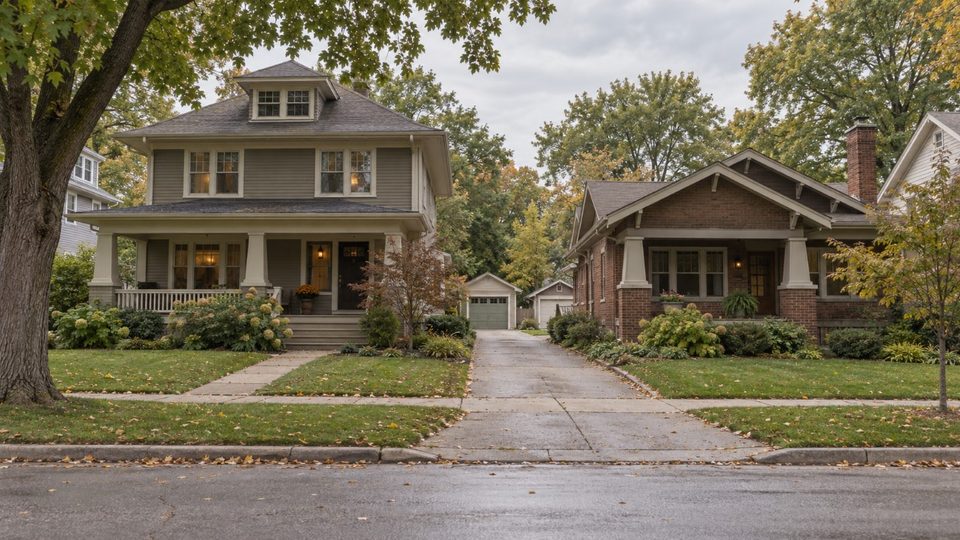
A substantial stock from the 1900s to the 1930s: foursquares with hipped roofs and deep porches, bungalows, and solid frame houses on regular lots. Generously built, with basements that were never intended as living space and that were frequently finished several decades later using the assembly that fails across this climate zone.
Balloon framing appears in the older end of this stock, which connects the basement air directly to the wall cavities and the attic. That is worth knowing before attributing an upstairs damp patch to the roof.
Ice Damming on Older Roof Lines
Short eaves, modest insulation depth as originally built, and a long freeze. Meltwater running down a roof warmed from below refreezes at the cold eave, backs up under the shingles and wets the top plate and the wall cavity beneath. The damage happens in February and the staining appears the following summer, which is why it is so often attributed to the wrong cause. See ice dams and attic mold.
Finishing Without Addressing the Outside First
The order matters more than the materials. Correcting grading, gutters and downspout discharge, then confirming the space stays dry through a full seasonal cycle, then finishing — that sequence works. Done the other way round it fails, and the finishes hide it while it does. On a property with any river proximity, add a properly sized sump with a backup to the list before anything goes on the walls.
What We Get Called About Most in Fort Atkinson
Ranked by how often it comes up, and tied to the buildings that are actually here rather than to mold in general.
- On the Rock River, upstream of JanesvilleFort Atkinson was one of the communities hit in the June 2008 flood, and the river remains the dominant water question for properties close to it.
- Foursquares and early-twentieth-century housingA substantial stock from the 1900s to the 1930s, with the basements and balloon framing that go with it, and finishing added decades later.
- Ice damming on older roof linesShort eaves, modest insulation depth and a long freeze. The damage shows at the top of the wall below the eave, usually the following summer.
- Basements finished without addressing the outsideThe order matters: correcting grading, gutters and drainage first, then finishing. Done the other way round it fails, and the finishes hide it while it does.
Neighborhoods and Sections We Cover in Fort Atkinson
Mold Services Available in Fort Atkinson
Mold Inspection
Thermal imaging and moisture metering to find the source before anything is opened up.
Basement Mold Removal
The dominant mold problem in Fort Atkinson — finished basement walls, limestone and block foundations, and sump failures.
Black Mold Removal
Full containment for water-damage indicator species, plus finding the sustained water source that let it establish.
Attic Mold Removal
Sheathing and rafter growth traced back to ventilation, bath fans or ice damming.
Water Damage & Flood Mold
Frozen and burst lines, sump failures and Rock River flooding — the 24 to 48 hour response window.
Clearance Testing
Independent verification by someone who did not perform the remediation.
What Mold Work Costs in Fort Atkinson
General market ranges for south-central Wisconsin, listed for the situations that actually come up in Fort Atkinson. These are planning figures rather than quotes — nobody can price a job they have not seen, and what moves a number most is the size of the wet area rather than the stained area. The full cost guide explains what drives each one up or down.
| Work | Typical range | Notes |
|---|---|---|
| Mold inspection with thermal imaging and moisture metering | $250–$600 | Most projects should start here |
| Flooded basement — extraction, removal of wet material, structural drying | $2,500–$8,000 | Before any mold work is priced |
| Unfinished basement clean, treat and dehumidify | $1,200–$3,500 | No finishes to remove |
| Finished basement — wall removal, drying, clearance | $4,000–$12,000 | Excluding reconstruction |
| Attic remediation with cleaning, treatment and re-insulation | $2,800–$7,500 | Ventilation correction usually extra |
| Independent post-remediation clearance testing | $400–$900 | Should not be the same firm that did the work |
Prices shown are examples only. For an accurate quote for your specific situation, call (608) 724-1919 — free consultation with a specialist.
Mold FAQ — Fort Atkinson, WI
Proximity matters, but so does elevation, and they are not the same thing. Two properties a block apart can sit a meter apart in height, which is the difference between a wet basement most springs and a dry one. The FEMA flood map tells you your flood zone; where your basement floor sits relative to the river and the street tells you most of the rest. What is worth doing regardless on low ground: a sump with a backup, a check valve on the floor drain, and nothing porous stored on the slab.
In that housing, three candidates in order. A basement finished decades later against a wall that was never meant to be covered. Ice damming at the eaves, showing up as a stain high on an upstairs wall or ceiling the summer after. And air movement from the basement into the wall cavities if the framing is balloon rather than platform. A moisture survey distinguishes them in an hour; the seasonal timing narrows it before anyone visits.
Where wet material was never removed, yes. That is the recurring finding along the whole Rock River corridor. Basements were pumped, fans were run, and walls were closed back up with the original drywall and insulation still in them because the surface felt dry. River water is biologically contaminated and that material will have colonized. If a property took water then and nobody opened the walls, it is the first thing worth checking.
The same south-central Wisconsin ranges: unfinished basement $1,200 to $3,500, finished basement $4,000 to $12,000 excluding reconstruction, flooded basement extraction and drying $2,500 to $8,000, attic remediation $2,800 to $7,500. See the cost guide for what moves each one.