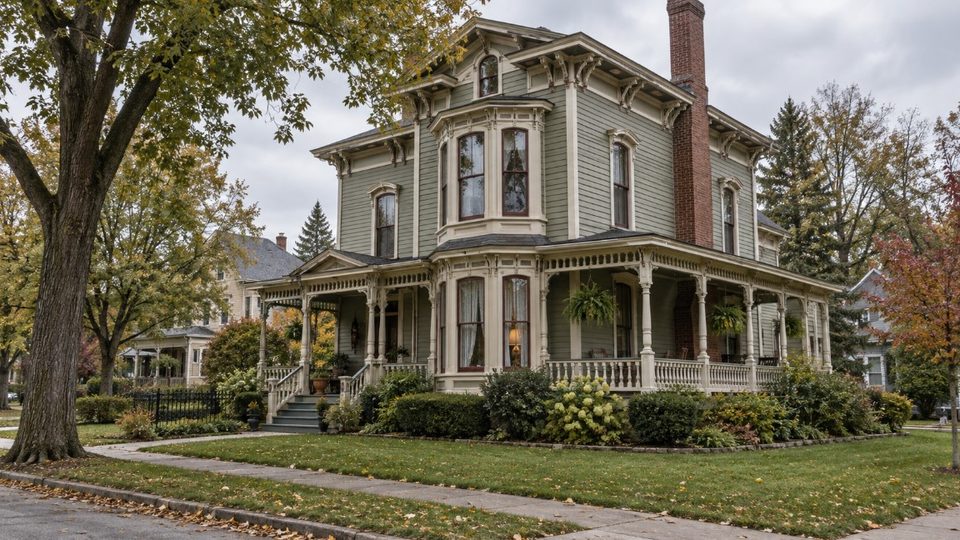
A Nineteenth-Century Village Core
Edgerton sits at the northern edge of Rock County and has a substantial stock of late-1800s housing in and around the village center, with the stone and brick cellars that go with it. The failure mode is the same one that defines Courthouse Hill in Janesville: a wall built in permanent capillary contact with the ground, designed — without anyone using the word — to let moisture evaporate from its inside face.
Those cellars have stood for well over a century in that condition. What damages them is later work that seals them: cement repointing that is harder and less permeable than the stone, waterproof coatings on the interior face, and insulated stud walls framed tight against the masonry. All three are sold as improvements, and all three stop the wall doing the one thing that kept it sound.
Serving Edgerton, WI
Call and tell us what is happening in your Edgerton property. A specialist will talk it through with you — free, and with no obligation.
(608) 724-1919Free phone consultation.
Tobacco-Era Outbuildings
Edgerton's history as a tobacco center left an unusual quantity of large wood-frame outbuildings, and a proportion of them have since been converted to storage, workshop or living use. They share a specific set of problems: a floor sitting directly on earth or on a slab poured without a vapor barrier, no insulation as built, and large volumes that are expensive to heat and therefore frequently left cold.
Converting one is entirely possible, but the ground has to be dealt with first. Insulating and finishing a building whose floor is a permanent moisture source puts organic material directly in the path of it.
Steep Roofs With Small Gable Vents
Housing of this period here has tall, steep roofs and, typically, two small gable vents and nothing else. That is not enough air movement for a Wisconsin winter. Warm moist air from the house collects at the peak, where the sheathing is coldest, and condenses on it. Because these attics are awkward to get into, it can run for many years before anybody looks.
Radon in an Old Basement
Rock County is an EPA Radon Zone 1 county, and the older the basement the more entry routes it has — a rubble stone wall with an earth or early concrete floor offers considerably more than a modern poured foundation. Testing is inexpensive and the result genuinely changes what you should do with the space, particularly if anyone is thinking about using it for anything beyond storage.
What We Get Called About Most in Edgerton
Ranked by how often it comes up, and tied to the buildings that are actually here rather than to mold in general.
- Nineteenth-century houses in the village coreEdgerton has a substantial stock of late-1800s housing, with the stone and brick cellars that go with it. The failure mode is the same as Courthouse Hill: a wall designed to dry inward, sealed by a later owner.
- Tobacco-era outbuildings and converted structuresLarge wood-frame outbuildings from the tobacco years, some converted to living or storage use, with no vapor control and a ground floor sitting on earth.
- Attic spaces in steep-roofed older housesTall, steep roofs with small gable vents and no ridge or soffit ventilation. Warm moist air collects at the peak and condenses on the sheathing.
- Radon in older basementsRock County sits in an EPA Zone 1 area and the older the basement, the more entry routes it has. Testing is cheap and the result changes what you should do with the space.
Neighborhoods and Sections We Cover in Edgerton
Mold Services Available in Edgerton
Mold Inspection
Thermal imaging and moisture metering to find the source before anything is opened up.
Basement Mold Removal
The dominant mold problem in Edgerton — finished basement walls, limestone and block foundations, and sump failures.
Black Mold Removal
Full containment for water-damage indicator species, plus finding the sustained water source that let it establish.
Attic Mold Removal
Sheathing and rafter growth traced back to ventilation, bath fans or ice damming.
Water Damage & Flood Mold
Frozen and burst lines, sump failures and Rock River flooding — the 24 to 48 hour response window.
Clearance Testing
Independent verification by someone who did not perform the remediation.
What Mold Work Costs in Edgerton
General market ranges for south-central Wisconsin, listed for the situations that actually come up in Edgerton. These are planning figures rather than quotes — nobody can price a job they have not seen, and what moves a number most is the size of the wet area rather than the stained area. The full cost guide explains what drives each one up or down.
| Work | Typical range | Notes |
|---|---|---|
| Mold inspection with thermal imaging and moisture metering | $250–$600 | Most projects should start here |
| Unfinished basement clean, treat and dehumidify | $1,200–$3,500 | No finishes to remove |
| Small contained area — one wall section, a closet, behind a water heater | $500–$1,500 | Under roughly 10–30 sq ft |
| Single room | $1,200–$3,800 | Containment, removal, drying, clearance |
| Attic remediation with cleaning, treatment and re-insulation | $2,800–$7,500 | Ventilation correction usually extra |
| Radon test, then mitigation if the result warrants it | $150 test · $900–$2,200 system | Rock County is an EPA Zone 1 county |
| Independent post-remediation clearance testing | $400–$900 | Should not be the same firm that did the work |
Prices shown are examples only. For an accurate quote for your specific situation, call (608) 724-1919 — free consultation with a specialist.
Mold FAQ — Edgerton, WI
The cheapest useful step is a sealed vapor barrier over the earth — heavy reinforced sheet, seams taped, turned up the walls and fastened. That removes the largest single moisture source in the building without sealing the walls, which is the distinction that matters in a stone cellar. Combine it with a dehumidifier and correcting the gutters and grading outside, and most of these cellars become considerably drier without anything being done to the masonry itself.
Yes, and the ground floor is where the project succeeds or fails. A slab with no vapor barrier under it, or bare earth, transmits moisture continuously, and anything warm and organic built on top of it will suffer. The options are a new slab with a barrier beneath, or a floating assembly with a vapor barrier and rigid foam above the existing floor. Address the roof ventilation at the same time, because these buildings almost never have any.
In a Wisconsin winter, usually yes. Gable vents alone do not produce reliable air movement through a roof space; what works is intake low at the eaves and exhaust high at the ridge, so air moves continuously. On a steep older roof the peak is where the moisture collects and where the sheathing is coldest. Before adding vents, though, air seal the ceiling plane — reducing the moisture arriving is more effective than trying to ventilate it away.
Particularly in a house this old. Rock County sits in EPA Radon Zone 1 and older basements have more entry routes than modern ones — an earth floor, a rubble wall, gaps at the sill. The test costs a fraction of anything else discussed on this site and it is the one indoor air risk here with a defined action level. If the answer comes back high, mitigation is straightforward and is cheapest while the space is otherwise being worked on.