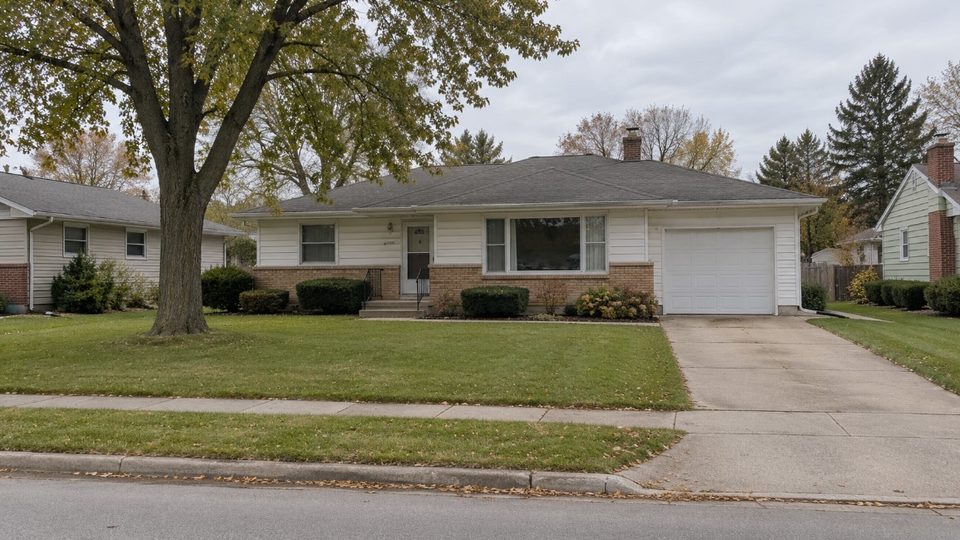
A Small City That Grew in Two Waves
Milton sits north-east of Janesville and grew substantially after the war and again in recent decades, with an older village core in between. That gives it a straightforward moisture profile compared with the river communities: the ground is good, there is no regional water problem, and almost everything is building-level.
The dominant call is the finished basement, in houses between thirty and sixty years old. The assembly is the one that fails across this whole climate zone — studs tight against the block, fiberglass batts, paper-faced drywall, carpet on the slab — and because whole streets were built and later finished in similar periods, the problem tends to be consistent across a neighborhood rather than isolated.
Serving Milton, WI
Call and tell us what is happening in your Milton property. A specialist will talk it through with you — free, and with no obligation.
(608) 724-1919Free phone consultation.
Re-Roofing Without Fixing the Intake
The second recurring issue and a genuinely common sequence here. New shingles go on, a ridge vent gets added because it is good practice, and nobody checks whether the soffit intakes are clear. Frequently they are not, because insulation was topped up at some point and buried them. The ridge vent then has nothing to draw, air stops moving through the roof space, and staining appears on the sheathing over the following winter — usually noticed the summer after that.
Crawl Spaces, Old Core and New Additions
Two versions here. In the older village core, a crawl space under part of the original footprint with a basement under the rest, at different levels and with no vapor barrier under the crawl. In newer housing, a crawl under a rear addition or a sunroom, vented to the outside. Both behave the same way in a southern Wisconsin July: outdoor air at 85°F and high humidity meets framing sitting in the low 60s, and condenses on it.
The Utility Room Nobody Looks At
Water softeners are close to universal in this part of the county, and a softener discharge line, a slow fitting or a brine tank overflow in a utility room produces exactly the kind of low-grade, long-running moisture that grows mold quietly. The room is visited when the salt runs out and otherwise ignored. Worth a flashlight behind the equipment twice a year.
What We Get Called About Most in Milton
Ranked by how often it comes up, and tied to the buildings that are actually here rather than to mold in general.
- Postwar and newer subdivision basementsMilton grew substantially after the war and again recently, so the dominant call is the finished basement assembly in a house between thirty and sixty years old.
- Attic ventilation in re-roofed housesSame pattern as the rest of the county: new shingles, unchanged intake, staining on the sheathing the following winter.
- Crawl spaces under additions and older coresVented crawl spaces under rear additions, and the older village core where a crawl sits under part of the footprint and a basement under the rest.
- Water softeners and utility-room leaksSoftener discharge and slow fittings in a utility room that nobody looks at between service visits.
Neighborhoods and Sections We Cover in Milton
Mold Services Available in Milton
Mold Inspection
Thermal imaging and moisture metering to find the source before anything is opened up.
Basement Mold Removal
The dominant mold problem in Milton — finished basement walls, limestone and block foundations, and sump failures.
Black Mold Removal
Full containment for water-damage indicator species, plus finding the sustained water source that let it establish.
Attic Mold Removal
Sheathing and rafter growth traced back to ventilation, bath fans or ice damming.
Water Damage & Flood Mold
Frozen and burst lines, sump failures and Rock River flooding — the 24 to 48 hour response window.
Clearance Testing
Independent verification by someone who did not perform the remediation.
What Mold Work Costs in Milton
General market ranges for south-central Wisconsin, listed for the situations that actually come up in Milton. These are planning figures rather than quotes — nobody can price a job they have not seen, and what moves a number most is the size of the wet area rather than the stained area. The full cost guide explains what drives each one up or down.
| Work | Typical range | Notes |
|---|---|---|
| Mold inspection with thermal imaging and moisture metering | $250–$600 | Most projects should start here |
| Finished basement — wall removal, drying, clearance | $4,000–$12,000 | Excluding reconstruction |
| Unfinished basement clean, treat and dehumidify | $1,200–$3,500 | No finishes to remove |
| Attic remediation with cleaning, treatment and re-insulation | $2,800–$7,500 | Ventilation correction usually extra |
| Crawl space remediation with encapsulation | $3,500–$11,000 | Vapor barrier, sealing, dehumidification |
| Independent post-remediation clearance testing | $400–$900 | Should not be the same firm that did the work |
Prices shown are examples only. For an accurate quote for your specific situation, call (608) 724-1919 — free consultation with a specialist.
Mold FAQ — Milton, WI
It does, and it is one of the few situations where a neighbor's problem is genuinely relevant to yours. Houses built together were usually finished later by similar contractors using the same assembly, and they share drainage, soil and exposure. If a house on your street has found growth behind a finished basement wall, the odds that yours has the same construction are high. That is a reason to do the non-destructive checks, not a reason to panic.
Common sequence, and the roof is not the cause. What usually happens is that a ridge vent is added with no working soffit intake to feed it, so air stops circulating, and at the same time nobody addressed the air leaking up from the house. The correction is air sealing the ceiling plane, baffles to hold the soffit intakes open, and balancing intake against exhaust. Going back to the roofer about shingles will not help.
In this climate, generally yes — but as part of doing the job properly rather than on its own. Closing the vents without first laying a sealed vapor barrier over the ground can trap moisture still evaporating out of the soil. The sequence is clean out, seal the ground, then close and insulate the vents, insulate the perimeter walls, and put a small dehumidifier in. Done in that order it works reliably.
Same south-central Wisconsin ranges as the rest of the county. Finished basement remediation excluding reconstruction $4,000 to $12,000; unfinished $1,200 to $3,500; attic with cleaning, treatment and re-insulation $2,800 to $7,500; crawl space with encapsulation $3,500 to $11,000. See the cost guide.