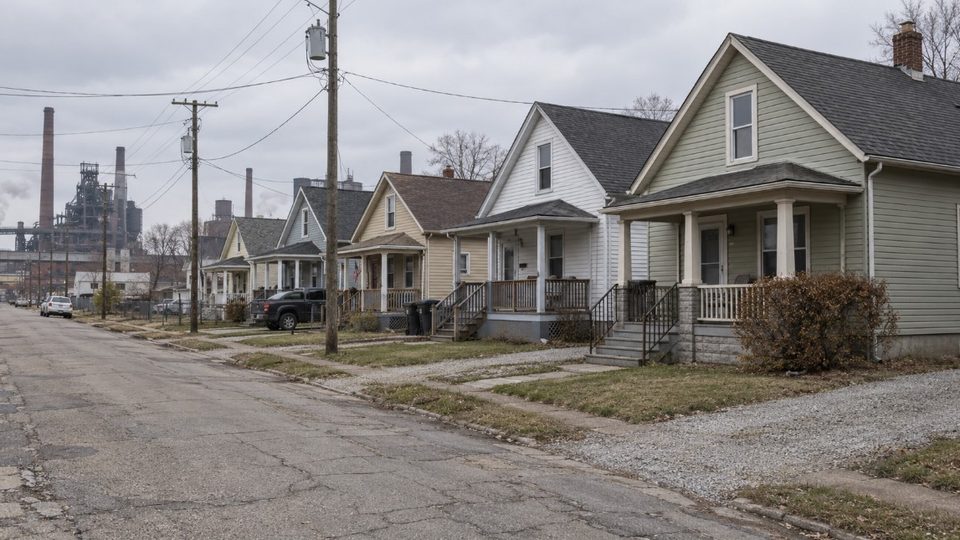
An Old River City With Old Housing
Beloit sits on the Rock River at the Illinois line, fifteen miles downstream of Janesville, and it is an industrial city with the housing stock that implies. A very large share of it is pre-1940 worker housing on small lots, built close to the water and close to the works that employed the people living in it. Stone and early block foundations, shallow footings, and no exterior damp-proofing that has survived.
The pattern that follows is consistent. These basements transmit ground moisture continuously, which is normally manageable, and they sit in a part of the city where the water table responds to the river. The combination means a basement that is damp for a substantial part of the year rather than occasionally.
Serving Beloit, WI
Call and tell us what is happening in your Beloit property. A specialist will talk it through with you — free, and with no obligation.
(608) 724-1919Free phone consultation.
The Same River, Further Down
Everything said about the Rock in Janesville applies here, with the catchment larger by the time it arrives. Neighborhoods close to the water see groundwater rise with the river, and the June 2008 event reached basements well back from the bank. As in Janesville, the lasting problem from that year is not the flood itself but the material that was dried in place and never removed. River water is Category 3 — biologically contaminated — and drywall and insulation that were in it should have come out.
Large Houses Split Into Flats
Beloit has a substantial stock of large older houses divided into multiple units, and the conversion work usually predates any modern thinking about ventilation. Bathrooms and kitchens were added where the plumbing was easiest rather than where an exhaust could reach an outside wall, which means extract fans commonly discharge into shared attics, into shafts, or simply into the ceiling void.
Multiply that by three or four units and the moisture load on a building designed for one household becomes substantial. The growth then shows up on the coldest surfaces — exterior corners, window reveals, and the top floor ceiling under an attic full of everybody's shower.
Rental Turnover
High turnover in parts of the city produces a recognizable pattern: problems get covered rather than traced. A wall that has been repainted three or four times between tenancies is usually telling you something, and the layers are a rough chronology. For tenants, the route in Wisconsin runs through habitability and repair obligations rather than a mold statute, and it depends entirely on written, dated notice. See mold in a Wisconsin rental.
Furnaces in Damp Basements
An air handler sitting in a humid basement draws that air across a coil and distributes it to every room above. It is the mechanism behind the common complaint that the upstairs bedrooms smell musty while the basement seems unremarkable. Cleaning the coil and condensate pan matters more than cleaning the ducts. See HVAC mold cleaning.
What We Get Called About Most in Beloit
Ranked by how often it comes up, and tied to the buildings that are actually here rather than to mold in general.
- An old river city with old housingBeloit is an industrial river city with a large stock of pre-1940 worker housing, much of it on small lots close to the Rock River. Stone and early block foundations, no exterior damp-proofing, and basements that were never meant to be dry in the modern sense.
- Riverfront and low-lying blocksThe same river, further downstream. Neighborhoods close to the water see groundwater rise with the river, and the 2008 event reached basements well back from the bank.
- Rental and multi-family conversionsLarge older houses split into flats, with bathrooms and kitchens added where the plumbing was easiest rather than where the ventilation was. Extract fans venting into shared attics are common.
- Student and short-tenancy housingTurnover means problems get covered rather than traced, and a wall that has been repainted three times is usually telling you something.
- Furnace and duct systems in damp basementsAn air handler sitting in a humid basement pulls that air in and distributes it. It is the reason a problem that started in one corner shows up in bedrooms upstairs.
Neighborhoods and Sections We Cover in Beloit
Mold Services Available in Beloit
Mold Inspection
Thermal imaging and moisture metering to find the source before anything is opened up.
Basement Mold Removal
The dominant mold problem in Beloit — finished basement walls, limestone and block foundations, and sump failures.
Black Mold Removal
Full containment for water-damage indicator species, plus finding the sustained water source that let it establish.
Attic Mold Removal
Sheathing and rafter growth traced back to ventilation, bath fans or ice damming.
Water Damage & Flood Mold
Frozen and burst lines, sump failures and Rock River flooding — the 24 to 48 hour response window.
Clearance Testing
Independent verification by someone who did not perform the remediation.
What Mold Work Costs in Beloit
General market ranges for south-central Wisconsin, listed for the situations that actually come up in Beloit. These are planning figures rather than quotes — nobody can price a job they have not seen, and what moves a number most is the size of the wet area rather than the stained area. The full cost guide explains what drives each one up or down.
| Work | Typical range | Notes |
|---|---|---|
| Mold inspection with thermal imaging and moisture metering | $250–$600 | Most projects should start here |
| Flooded basement — extraction, removal of wet material, structural drying | $2,500–$8,000 | Before any mold work is priced |
| Unfinished basement clean, treat and dehumidify | $1,200–$3,500 | No finishes to remove |
| Finished basement — wall removal, drying, clearance | $4,000–$12,000 | Excluding reconstruction |
| Single room | $1,200–$3,800 | Containment, removal, drying, clearance |
| HVAC coil, plenum and duct cleaning | $600–$1,800 | Where the air handler is distributing the problem |
| Independent post-remediation clearance testing | $400–$900 | Should not be the same firm that did the work |
Prices shown are examples only. For an accurate quote for your specific situation, call (608) 724-1919 — free consultation with a specialist.
Mold FAQ — Beloit, WI
On average the housing is older and closer to the river, so the low-lying older neighborhoods do see more of it. But it is not a city-wide answer — higher ground in Beloit behaves much like higher ground in Janesville, and a well-drained 1970s house here has an ordinary building-level profile. The two variables that matter are the age of the foundation and the height above the river, and those vary street by street rather than by city.
With the ventilation, before anything else. In converted buildings the recurring fault is extract fans that do not reach outside air, and the load from three or four kitchens and bathrooms in a building designed for one household is considerable. Go into the attic and trace every duct you can find. Then check the shared basement, because stack effect carries that air upward into every unit. Those two usually account for most of it.
Where wet material was never removed, yes. River flood water is Category 3 and porous material that has been in it should have come out regardless of how dry it later felt. A great many basements across the Rock River communities were pumped, dried with fans and closed back up with the original drywall and insulation in place. Those buildings frequently have a persistent musty basement that no amount of dehumidification resolves, because the source is inside the wall.
The same south-central Wisconsin ranges as Janesville: an unfinished basement clean and dry $1,200 to $3,500, a finished basement $4,000 to $12,000 excluding reconstruction, a flooded basement extraction and drying $2,500 to $8,000. Multi-unit buildings are usually priced by area and containment complexity rather than by these fixed scenarios.