A University Town, Which Changes Everything
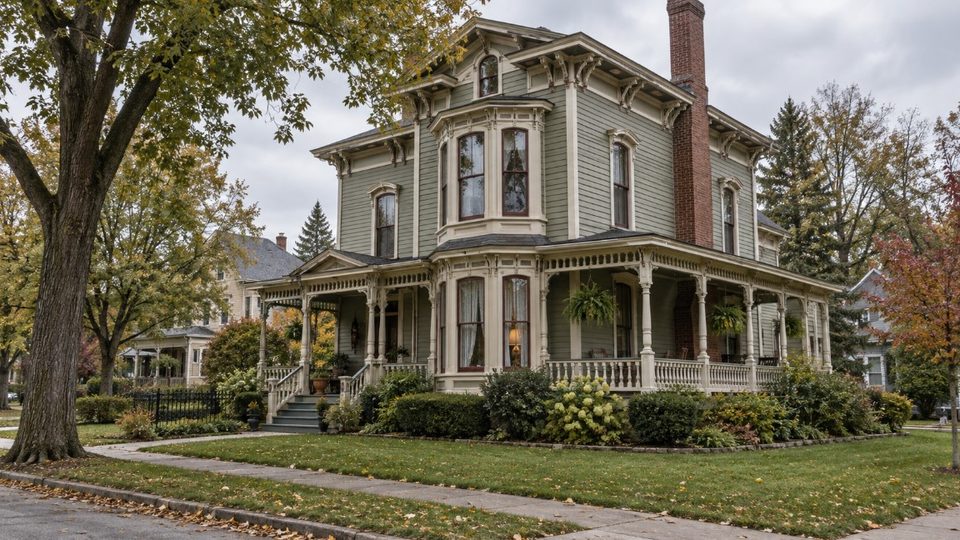
Whitewater sits east of Janesville on the Walworth County line, and it has a housing profile unlike anywhere else we cover: a large rented stock with high turnover, much of it older houses divided into units, occupied by people who are not there in the summer.
The practical consequence is that mold complaints here are as often a tenant-landlord question as a building one. That changes what is useful. Documentation matters more than usual, which is why testing gets requested in Whitewater more than anywhere else in our coverage — not because the buildings are worse, but because somebody needs to prove something to somebody else.
Serving Whitewater, WI
Call and tell us what is happening in your Whitewater property. A specialist will talk it through with you — free, and with no obligation.
(608) 724-1919Free phone consultation.
Older Houses Split Into Units
Bathrooms and kitchens inserted where the plumbing allowed rather than where ventilation could reach an outside wall. Extract fans discharging into ceiling voids, shared attics or soffits. And far more moisture generated per square foot than the house was ever built for — four or five people showering, cooking and drying clothes in a building designed for one family.
The growth then appears on the coldest surfaces: exterior corners, window reveals, behind wardrobes against outside walls, and on the top-floor ceiling under an attic that is collecting everyone's shower.
Summer Vacancy
Buildings shut up with the heating off and the humidity uncontrolled for weeks at a time, in the months when outdoor humidity in southern Wisconsin is at its highest. Nobody is opening a window, running an extract fan or emptying a dehumidifier. Owners return in August to a smell that was not there in May. Running a dehumidifier on a humidistat through the summer is the cheapest prevention available for this specific problem.
Basement Bedrooms
Below-grade rooms used as sleeping space in buildings where the basement was never intended to be occupied, frequently without adequate ventilation, egress or dehumidification. Beyond the moisture question this is worth checking against local occupancy requirements, because a basement bedroom that does not meet egress and light standards is a problem independent of anything growing in it.
For Tenants, Briefly
Wisconsin has no mold-specific statute. The route runs through habitability and repair obligations, and it depends entirely on written, dated notice. Put the complaint in writing, keep a copy, photograph everything with dates, keep a log of what you reported and when, and give a reasonable opportunity to fix it. See mold in a Wisconsin rental.
What We Get Called About Most in Whitewater
Ranked by how often it comes up, and tied to the buildings that are actually here rather than to mold in general.
- Student rental housingA university town has a large rented stock with high turnover, and mold complaints here are as often a tenant-landlord question as a building one. Documentation matters more than usual, which is why testing gets requested more often here than anywhere else we cover.
- Older houses split into multiple unitsBathrooms and kitchens inserted where the plumbing allowed, ventilation added as an afterthought, and far more moisture generated per square foot than the house was built for.
- Vacancy over the summer and between termsBuildings shut up with the heating off and the humidity uncontrolled for weeks at a time.
- Basement bedroomsBelow-grade rooms used as sleeping space, frequently without adequate ventilation or a dehumidifier, in buildings where the basement was never intended to be occupied.
Neighborhoods and Sections We Cover in Whitewater
Mold Services Available in Whitewater
Mold Inspection
Thermal imaging and moisture metering to find the source before anything is opened up.
Basement Mold Removal
The dominant mold problem in Whitewater — finished basement walls, limestone and block foundations, and sump failures.
Black Mold Removal
Full containment for water-damage indicator species, plus finding the sustained water source that let it establish.
Attic Mold Removal
Sheathing and rafter growth traced back to ventilation, bath fans or ice damming.
Water Damage & Flood Mold
Frozen and burst lines, sump failures and Rock River flooding — the 24 to 48 hour response window.
Clearance Testing
Independent verification by someone who did not perform the remediation.
What Mold Work Costs in Whitewater
General market ranges for south-central Wisconsin, listed for the situations that actually come up in Whitewater. These are planning figures rather than quotes — nobody can price a job they have not seen, and what moves a number most is the size of the wet area rather than the stained area. The full cost guide explains what drives each one up or down.
| Work | Typical range | Notes |
|---|---|---|
| Mold inspection with thermal imaging and moisture metering | $250–$600 | Most projects should start here |
| Single room | $1,200–$3,800 | Containment, removal, drying, clearance |
| Finished basement — wall removal, drying, clearance | $4,000–$12,000 | Excluding reconstruction |
| Unfinished basement clean, treat and dehumidify | $1,200–$3,500 | No finishes to remove |
| HVAC coil, plenum and duct cleaning | $600–$1,800 | Where the air handler is distributing the problem |
| Independent post-remediation clearance testing | $400–$900 | Should not be the same firm that did the work |
Prices shown are examples only. For an accurate quote for your specific situation, call (608) 724-1919 — free consultation with a specialist.
Mold FAQ — Whitewater, WI
Sometimes partly, and it is rarely the whole answer. Occupant behavior genuinely does affect indoor humidity — drying clothes indoors, long showers with no extract, blocked trickle vents. But behavior cannot explain growth where there is no working extract fan to use, where a fan discharges into the attic, where the wall is uninsulated and condensing, or where there is a leak. The way to settle it is measurement: a hygrometer log over two weeks, plus a check of whether the ventilation provided actually works.
In a dispute, yes — this is one of the situations where testing genuinely earns its cost, because you need something a third party can read. Make sure it is done properly: an outdoor control sample taken the same day, multiple indoor locations, an accredited laboratory, and a written interpretation rather than a bare count. A single indoor sample with no control is not evidence of anything and will be dismissed.
A dehumidifier on a humidistat, plumbed to a drain so nobody has to empty it, set around 50 percent. That one thing addresses most of what goes wrong in a vacant Wisconsin building over a humid summer. If there is any air conditioning, leaving it on a high set point helps too. What does not work is shutting everything off to save energy, which is the default and which is why the smell is there in August.
Potentially two problems. The moisture one: below-grade rooms need ventilation and humidity control that basements usually do not have, and a bed against a cold exterior wall is a condensing surface. And a compliance one: basement sleeping rooms have egress and light requirements, and a room that does not meet them is an issue regardless of air quality. Worth checking both, particularly in a rented property.