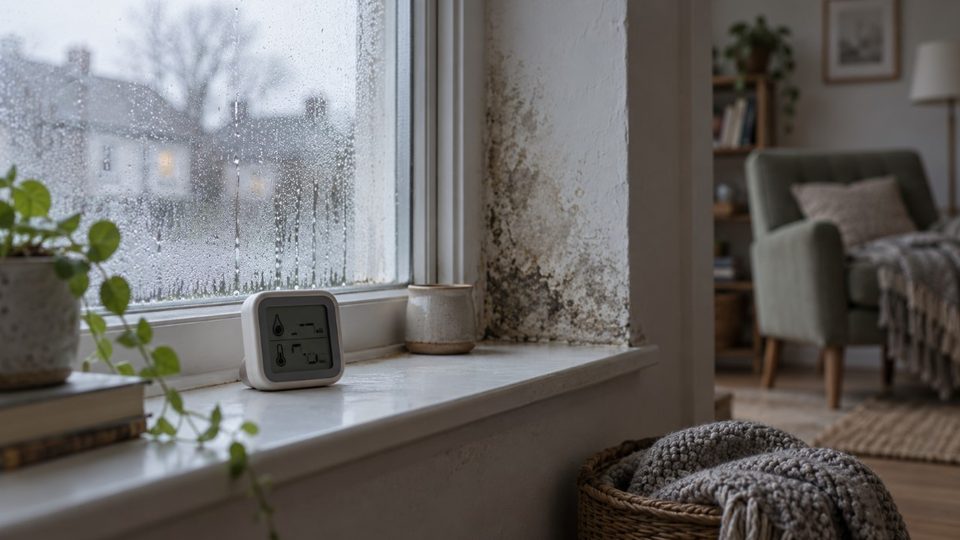
Why This Article Is Deliberately Boring
There is a great deal written about mold and health, and much of it is either dismissive or alarming. Neither is supported by the major evidence reviews. What follows is what the substantial reviews actually concluded, with the uncertainty left in rather than resolved in whichever direction suits.
Have a specific situation?
This article covers the general case. For your own building, call and describe what you are seeing. The conversation is free.
(608) 724-1919Free phone consultation.
What the Major Reviews Found
Two documents carry most of the weight here. The Institute of Medicine's Damp Indoor Spaces and Health (2004) and the World Health Organization's Guidelines for Indoor Air Quality: Dampness and Mould (2009). Both reviewed the published literature systematically rather than arguing a position.
What they found sufficient evidence of association for
- Upper respiratory tract symptoms — nasal congestion, irritation
- Cough
- Wheeze
- Asthma symptoms in people who already have asthma
- Hypersensitivity pneumonitis in susceptible individuals (uncommon)
What the evidence was limited or suggestive for
- Development of asthma in previously unaffected children
- Lower respiratory illness in otherwise healthy children
- Shortness of breath
What they found inadequate or insufficient evidence for
- Airborne mycotoxin exposure at ordinary indoor levels causing systemic illness
- Neurological or cognitive symptoms attributed to household mold exposure
- Cancer
- Reproductive effects
- Acute idiopathic pulmonary hemorrhage in infants — an early reported association that later investigation did not support
Damp buildings are associated with respiratory symptoms, and that association is consistent enough to act on. The dramatic systemic illnesses attributed to household mold are not supported by those reviews. Both of those statements are true at the same time, and a source that gives you only one of them is selling something — either a remediation you may not need, or a reassurance you should not accept.
An Important Nuance About Dampness
The reviews consistently found associations with dampness, not specifically with mold. That distinction matters more than it sounds. A damp building also has dust mites, bacteria, off-gassing from wet materials, and chemical breakdown products from degrading building materials. Which of those is responsible for a given symptom is, in most cases, not separable with current evidence.
The practical consequence is reassuring rather than otherwise: the intervention is the same either way. Fix the dampness and you address the whole cluster, whichever component is doing the damage.
In a Janesville house that usually means one of three things: summer condensation on a cold basement wall, winter moisture condensing inside the wall assemblies, or water arriving from outside. Each has a different correction, and an inspection is what distinguishes them.
Who Should Treat It as More Urgent
- Anyone with asthma, particularly if it is poorly controlled
- People with allergic rhinitis or known mold allergy
- Anyone immunocompromised — chemotherapy, transplant medication, advanced HIV. Aspergillus in particular is a genuine clinical concern in this group.
- People with chronic lung disease
- Infants and the elderly, on general susceptibility grounds
For everyone else the appropriate response is to correct the moisture on a sensible timescale rather than to treat the house as uninhabitable.
On Mycotoxins
Mycotoxins are real compounds and some molds produce them. The evidence question is not whether they exist but whether inhalation exposure at the concentrations found in ordinary damp buildings causes the effects attributed to it. On that, the IOM and WHO reviews found the evidence inadequate. Most of the serious documented mycotoxin harm in humans comes from ingestion — contaminated grain and feed — at doses far above anything measured indoors.
This is stated plainly because the mycotoxin argument is the basis of a large amount of expensive testing and treatment sold to worried homeowners.
The Conditions That Do Have Names
Between “a bit of congestion” and the systemic illnesses the evidence does not support, there are several recognized diagnoses. They are uncommon, they are real, and they are diagnosed clinically rather than by looking at a building.
| Condition | What it is | Who gets it |
|---|---|---|
| Allergic rhinitis / allergic asthma | IgE-mediated allergy to specific mold species. Confirmable by skin prick or blood testing. | Common. The usual explanation for symptoms that track with being at home. |
| Hypersensitivity pneumonitis | Immune inflammation of the lung tissue itself after repeated exposure to inhaled organic material. Serious, and can become permanent if exposure continues. | Rare. Historically occupational — farmer's lung, humidifier lung — but domestic cases occur. |
| Allergic bronchopulmonary aspergillosis | An allergic reaction to Aspergillus colonizing the airway. | Almost entirely people with asthma or cystic fibrosis. |
| Invasive aspergillosis | An actual fungal infection of tissue. A medical emergency. | Severely immunocompromised people only. |
| Irritant response | Non-allergic irritation of eyes, nose and throat from spores, fragments and microbial volatile compounds. | Anyone, at high enough exposure. |
The relevance to a homeowner is narrow but useful: if your symptoms are confined to the upper airway and improve away from the house, the first two rows cover most of what is likely. If you are breathless, or have a cough with fever after being in a particular space, that is worth a clinician's attention rather than a contractor's.
On CIRS, Biotoxin Illness and Mold-Literate Practitioners
You will find, quickly, a body of material describing chronic inflammatory response syndrome — CIRS, sometimes called biotoxin illness — as a multi-system condition caused by exposure to water-damaged buildings in genetically susceptible people. It is worth being straightforward about where this stands, because the people searching for it are usually unwell and are being asked to spend a great deal of money.
- It is not a recognized diagnosis in mainstream clinical practice, and it does not appear as such in the major evidence reviews of damp buildings and health.
- The diagnostic apparatus is specific to the framework — visual contrast sensitivity screening, HLA haplotype panels, a battery of inflammatory markers, urine mycotoxin tests. Each is interpreted against reference ranges established within that framework rather than externally validated for this purpose.
- The treatment protocols are long and expensive, frequently involving binders, sequenced pharmaceuticals, and repeated testing, and are generally not covered by insurance.
- The symptoms people report are real. Fatigue, cognitive difficulty, aches and breathlessness are not imaginary, and dismissing them is not the same as evaluating the framework offered to explain them.
What can be said without taking a side on the mechanism: the building intervention is identical either way. Whatever the correct explanation for a given person's symptoms, a damp building should be dried and the growth removed, and that is the part we can do and verify. The medical question belongs with a clinician, and a second opinion from a respiratory or allergy specialist costs a fraction of a protocol.
One practical warning. Where a practitioner, a testing company and a remediation referral are commercially connected, a homeowner can end up buying a diagnosis, a test to confirm it and a treatment for the house from parties with a shared interest in the answer. Keep the building assessment independent of whoever is treating you, in the same way clearance testing is kept independent of the remediation contractor.
What to Do If You Think the House Is Affecting Your Health
- Record the patternSymptoms, dates, whether they improve away from home and how quickly they return. That record is useful both to a clinician and to anyone assessing the building.
- See a clinicianNobody assessing a building can diagnose a person. Allergy testing can establish whether you are sensitized to specific molds.
- Find the moistureWhich is the building side of the question, and the part that actually gets fixed.
- Do not buy a mycotoxin panel firstUrine mycotoxin testing is marketed heavily to people in exactly this situation and is not supported for this purpose by mainstream clinical bodies.
- Fix the dampness, then reassessIf symptoms resolve, you have your answer without ever having needed to identify a species.
Questions This Article Raises Most Often
For most healthy people, the supported effects are respiratory and allergic: congestion, cough, wheeze, and worsening of existing asthma. Serious illness is a genuine risk for a defined group — people who are immunocompromised, for whom Aspergillus infection is a real clinical concern, and people with severe asthma or hypersensitivity pneumonitis. The dramatic systemic illnesses widely attributed to household mold are not supported by the IOM or WHO reviews.
Mainstream clinical bodies do not support these tests for diagnosing environmental mold exposure. The tests are sold widely to people worried about their homes, results are difficult to interpret without a validated reference range, and a positive result does not establish where any compound came from. If you have symptoms, a clinician and conventional allergy testing are the appropriate route. Spend the money on finding the moisture instead.
No — those are two separate questions. A clinician can tell you whether your symptoms have an identifiable cause; they are not assessing your building. A damp building is worth correcting regardless of whether it is responsible for a particular symptom, because dampness damages the structure, and the association with respiratory effects is consistent across the literature even where causation in an individual case cannot be established.
Where the building was the cause, people typically report improvement over days to a few weeks once the source is removed and the structure is dry. If there is no change after several weeks, consider two possibilities: the moisture source was not fully found — a second source, a crawl space, the air handler — or the symptoms have another cause. Both are worth pursuing rather than assuming the remediation failed.
Not in the way the phrase implies. Stachybotrys is a water-damage indicator species, so finding it tells you there has been sustained moisture — which is genuinely useful. What the evidence does not support is that ordinary indoor exposure to it causes uniquely severe outcomes. The CDC's position is that all indoor mold growth should be removed and that there is no reason to treat one species as categorically different for cleanup purposes.